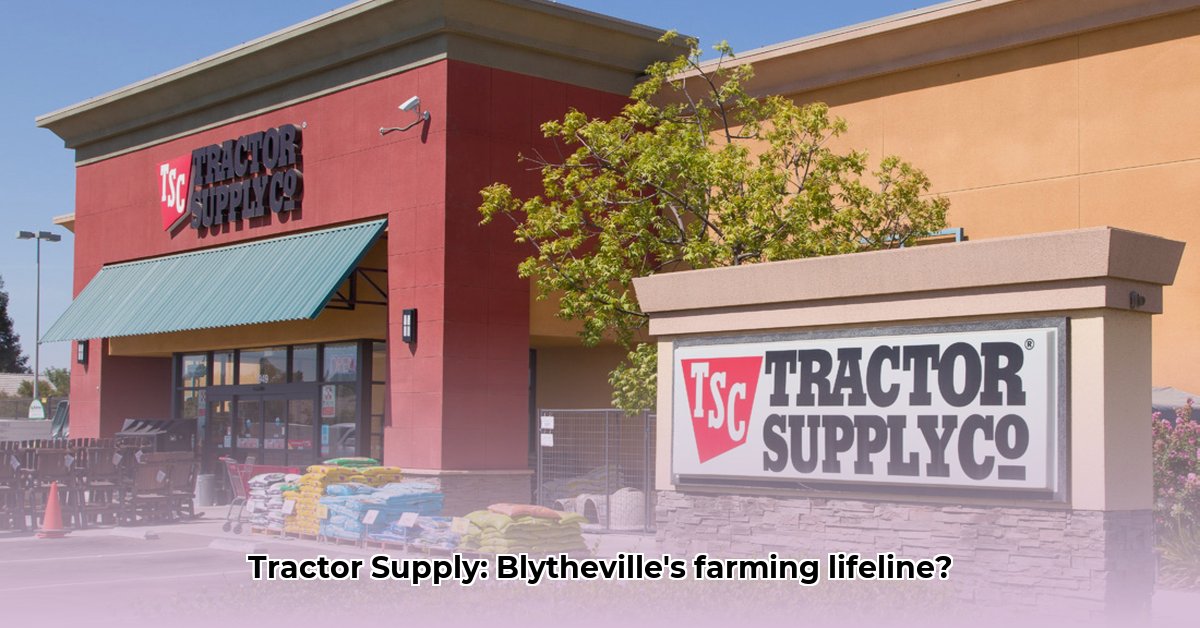
Tractor Supply Blytheville: A Local Resource, But How Sustainable?
Tractor Supply Company's presence in Blytheville, Arkansas, offers a convenient resource for local farmers. Its proximity to Blytheville and surrounding communities like Dell, Gosnell, and Holland provides readily accessible agricultural supplies. However, the extent of its contribution to sustainable farming practices remains largely unquantified. This article explores the potential role of Tractor Supply in supporting local farmers and addresses the need for further investigation into its sustainability initiatives. We will explore accessibility, potential sustainable offerings, and outline crucial steps for future progress. For more information on this specific location, visit the Blytheville Tractor Supply page.
Accessibility and Geographic Context
For farmers in the region, the location of the Blytheville Tractor Supply store is a significant factor. Its strategic placement likely reduces travel time and fuel consumption compared to more distant suppliers. (While a map would visually enhance this point, data limitations prevent its inclusion.) Proximity to major roadways like I-55 and AR-18 could also streamline the delivery of goods, further enhancing the store's convenience. But is this convenience translating to access to essential sustainable supplies?
Exploring Sustainability: Potential, Not Certainty
The potential for Tractor Supply to support sustainable farming in Blytheville exists. The store could offer water-saving irrigation equipment, organic fertilizers, and other environmentally friendly products. However, currently, there's a lack of readily available information confirming the breadth and depth of these offerings in the Blytheville location. It’s crucial to emphasize that any claims regarding sustainability are based on potential, not definitive proof, given the current absence of empirical data. We need to investigate what exactly they stock – is it solely focused on conventional farming supplies, or does it include a meaningful range of eco-conscious choices?
Challenges and Opportunities: A Call for Collaboration
The store’s potential for supporting sustainable agriculture hinges on several interdependent factors which require collaboration amongst various stakeholders. How can we ascertain the real impact of Tractor Supply on sustainability in the area?
1. Farmer Input: Farmers need to engage directly with Tractor Supply, communicating their demand for sustainable products. This direct feedback is crucial for influencing inventory decisions and ensuring the store stocks what the community needs.
2. Transparency from Tractor Supply: The company should be more transparent about its sustainable offerings. Publicly available information, such as an online inventory or FAQ section dedicated to eco-friendly products, would significantly improve transparency and allow for a more accurate assessment.
3. Research and Data Collection: Empirical research is needed to quantify the impact of Tractor Supply on the environmental footprint of local agriculture. This research should examine the range of sustainable products actually offered, their uptake by farmers, and the overall environmental consequences.
4. Community Engagement: Facilitating discussions and collaborations between Tractor Supply, local farmers, and governing bodies could help foster a shared understanding and create incentives for sustainable practices.
Conclusion: A Need for Further Investigation
The role of Tractor Supply in Blytheville's agricultural sustainability remains a subject requiring further investigation. While the store offers geographically convenient access to supplies, its contribution to sustainable farming practices is yet to be clearly defined. The potential exists, but the lack of readily available data limits definitive conclusions. Farmers, Tractor Supply, researchers, and local authorities all have a role to play in gathering this information and shaping a more sustainable future for Blytheville agriculture. We encourage readers to contact their local Tractor Supply store and inquire about their sustainability initiatives. The future of sustainable farming in Blytheville depends on such engagement and informed decision-making.